There are more ways to put a design on a shirt than ever — screen printing, direct-to-garment, heat transfer, vinyl, embroidery, and specialty decoration methods. People ask us all the time which is best. The honest answer is “it depends,” but for the kind of custom apparel most Austin businesses, schools, teams, events, and organizations need, screen printing is still what we reach for first.
Screen printing has stayed the gold standard because it solves the problems most custom shirt orders actually have: the print needs to look sharp, hold up after washing, match the brand or event colors, and make financial sense when the order gets larger. Here’s why it still works so well.
It holds up
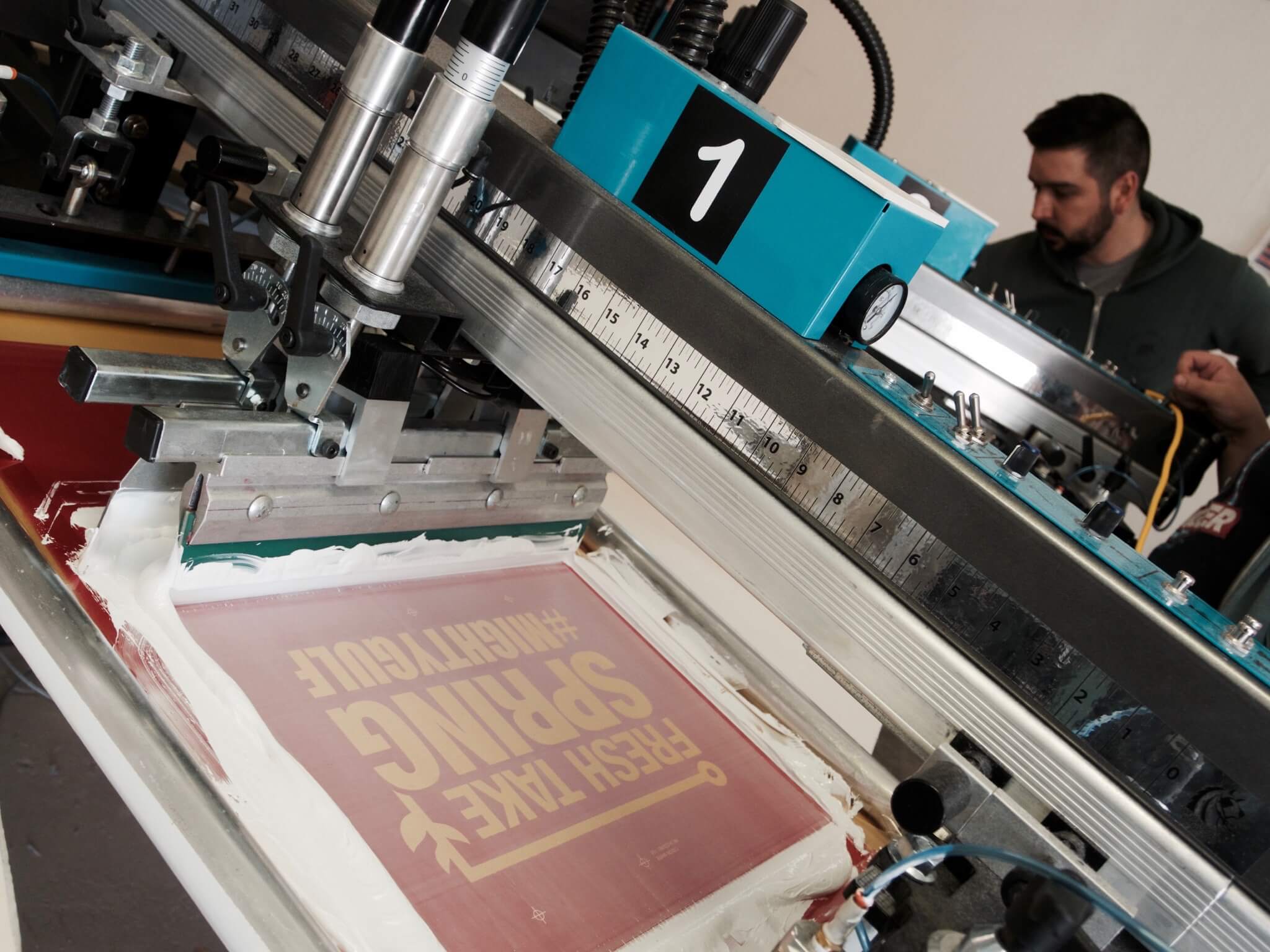
Screen printing pushes ink into the fabric and cures it with heat, so the print becomes part of the shirt rather than sitting loosely on top of it. A properly cured screen print can last for years of regular wear and washing. We’ve had customers come back with shirts they’ve worn hard where the print still looks sharp.
That durability matters for work crews, restaurant staff, school events, volunteer shirts, festival merch, athletic teams, employee uniforms, and promotional apparel. If the shirt is going to be worn repeatedly — not just photographed once — screen printing is usually the safer choice.
The colors are bright and consistent
Because we’re laying down actual ink through a screen, the colors come out bold and opaque, even on dark garments. Each color is printed through its own screen, which helps keep the design crisp and repeatable from the first shirt to the last.
That matters for business branding and custom apparel because brand colors need to look intentional. Screen printing can use Pantone color matching, strong opacity, and clean edges, which is important for logos, text, school marks, sponsor art, and designs that need to stay readable from a distance.
It performs better than digital methods on many apparel orders
Digital printing and heat transfers both have their place. They can be useful for very small quantities, one-off designs, or full-color photo-style artwork. But for many professional custom apparel orders, screen printing wins on durability, color saturation, and consistency across the whole run.
Heat transfer vinyl can feel heavier and may crack or peel over time if it is not the right fit for the garment. Direct-to-garment printing can make sense for detailed full-color artwork, but it is not always the strongest choice for bold logos, dark shirts, or larger runs. Screen printing keeps the result cleaner, brighter, and more predictable for the kinds of designs most organizations order.
It gets cheaper the more you order
Most of the work in screen printing happens up front — preparing the artwork, separating colors, and burning a screen for each color. Once the screens are made, printing each shirt is fast. So the setup cost spreads across the whole order, and the price per shirt drops as your quantity goes up.
That is why screen printing is such a strong fit for bulk merchandise, employee apparel, school shirts, team gear, event shirts, customer gifts, and promotional campaigns. For larger quantities, it gives you the best balance of quality, durability, and cost. If you are planning a larger run, our bulk custom t-shirt printing page is a useful next step.
It works for real business and community use
Screen printed apparel is not just about putting art on a shirt. It helps businesses look more professional, gives teams and schools a shared identity, turns events into something people remember, and gives brands merchandise people actually want to wear.
For Austin businesses, that might mean staff shirts, trade show giveaways, launch merch, customer gifts, or uniforms. For schools and community groups, it might mean fundraiser shirts, field trip shirts, team shirts, or volunteer apparel. The common thread is that the shirt needs to look good and hold up after the event is over.
When we’d steer you elsewhere
We’re not going to pretend screen printing is always the answer. If you need fewer than a couple dozen shirts, or your design is a full-color photograph with hundreds of shades, direct-to-garment printing or another method may be the better fit — and we’ll tell you that honestly rather than talk you into a process that doesn’t suit your project.
For the vast majority of custom apparel — logos, text, bold designs, employee shirts, school shirts, event shirts, team gear, and anything ordered in quantity — screen printing gives you the best combination of quality, durability, and value. That’s why it’s still the backbone of what we do at our shop here in Austin.
If you’ve got a project in mind and aren’t sure which method fits, get a quote and we’ll give you a straight recommendation.
For local orders that need help choosing shirts, print method, and artwork setup, our T-shirt printing in Austin page is the better starting point.

Leave a Reply