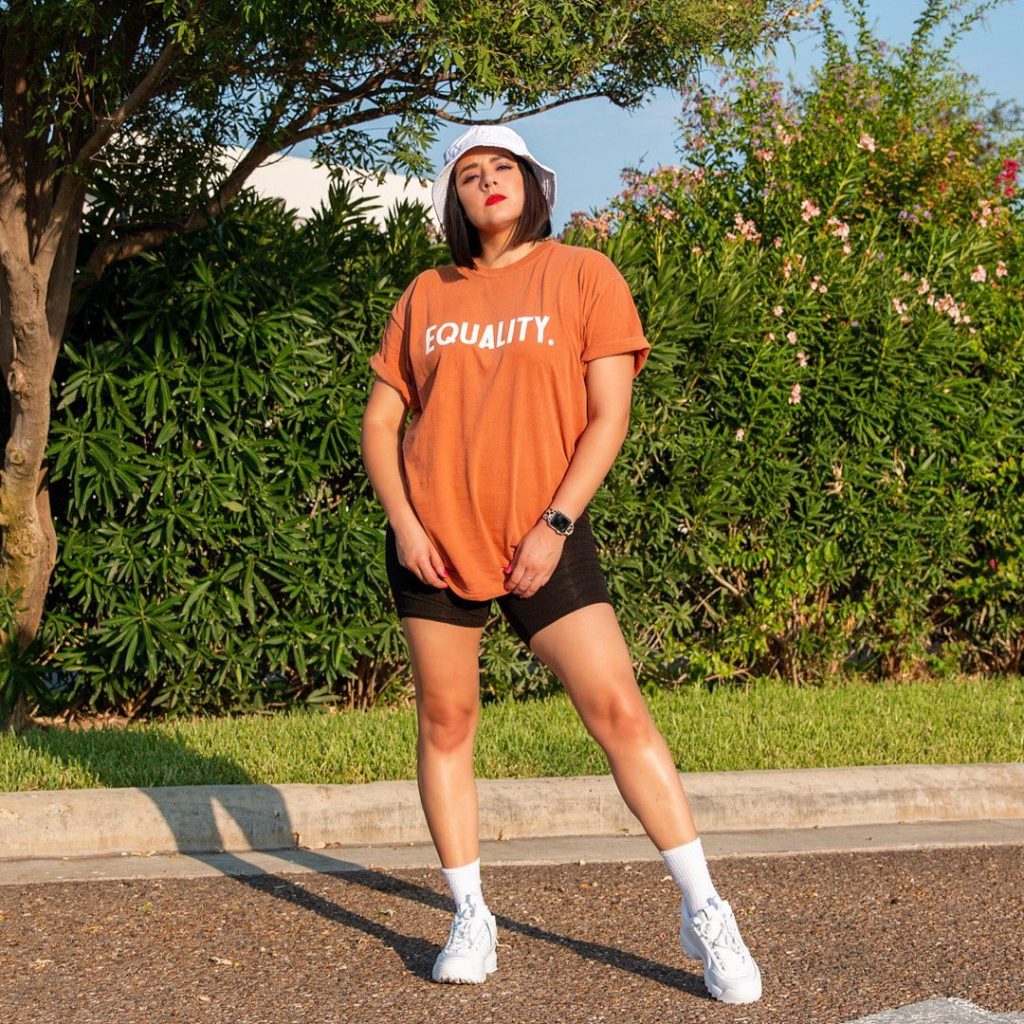
We screen print on a lot of different t-shirt brands at our Austin shop — Gildan, Bella+Canvas, Next Level, Hanes, you name it. But the one customers ask about by name more than any other is Comfort Colors. People come in specifically requesting them, or they pick one up from our sample wall and say “I want this one.”
There’s a reason for that. Comfort Colors shirts feel different because they actually are different — in ways you can feel the second you put one on. Here’s what makes them special, who they’re best for, and when you might want to go with something else instead.
 A Brand Built on One Idea
Comfort Colors started in the late 1970s in rural Vermont, when founder Barry Chouinard began experimenting with garment-dyed clothing using nothing more than a few dollars and an old washing machine. He spent years perfecting the dyeing process before introducing the Comfort Colors name in 1995, creating the industry’s first garment-dyed, ringspun cotton t-shirts.
The brand grew so successfully that Gildan acquired it in 2015. Under Gildan, Comfort Colors kept its distinctive manufacturing process and quality while gaining access to a much larger distribution network. It’s now one of the most requested blank apparel brands in the custom printing industry — and we see that demand firsthand at our shop every week.
What Makes Comfort Colors Different
Garment-Dyed, Not Piece-Dyed
This is the biggest difference and the one most people don’t know about. Most t-shirts are “piece-dyed” — the fabric is dyed in bulk before the shirt is cut and sewn. Comfort Colors does it the other way around: the shirt is sewn first from raw cotton, then the finished garment is dyed as a whole piece.
Why does that matter? It gives every shirt a slightly lived-in, washed look from day one. The color is rich but not bright-and-shiny the way a standard tee is. It looks like a shirt you’ve owned and loved for a few years, except it’s brand new. That broken-in, vintage aesthetic is what people are actually responding to when they say a Comfort Colors shirt “just feels different.”
Heavyweight Cotton That Doesn’t Feel Heavy
Comfort Colors shirts — especially their flagship 1717 model — are a true heavyweight at 6.1 oz. For reference, a standard Gildan 5000 is 5.3 oz, and a Bella+Canvas 3001 is 4.2 oz. You can feel the difference immediately.
But here’s the thing that surprises people: despite being heavier, Comfort Colors shirts don’t feel stiff or thick the way some heavyweight tees do. The garment-dye process and the ringspun cotton give them a softness that a lot of lighter shirts can’t match. It’s a substantial shirt that still drapes and breathes. That’s hard to pull off and it’s why people pay more for them.
 The Relaxed, Boxy Fit
Comfort Colors doesn’t do slim-fit. Their cut is intentionally relaxed and slightly boxy — wider through the body, a little longer, not tapered at the waist. And that’s not a compromise, it’s a design choice that actually works better for custom printing than a fitted shirt does.
Here’s why the boxy fit matters for printed apparel specifically:
The print lays flat and reads clearly. On a slim-fit shirt, the fabric stretches and pulls across the body, which can distort a design — especially larger front prints. On a relaxed, boxy cut, the front panel hangs naturally, giving the print a clean, undistorted canvas. This is why vintage band tees, surf brands, and streetwear labels almost always use a boxier blank — the design looks better when the fabric isn’t clinging.
It’s universally flattering for group orders. When you’re ordering shirts for a group — a church, a Greek organization, a coffee shop staff, an event — you’re fitting dozens of different body types with one garment. A relaxed, boxy fit is forgiving across sizes in a way that slim-fit simply isn’t. Nobody feels squeezed, nobody feels like they got the wrong size. That’s a practical advantage that matters when you’re handing out shirts to 50 people who didn’t get to try them on first.
It matches the vintage aesthetic. The whole point of Comfort Colors is that lived-in, been-wearing-it-forever feeling. A boxy fit is part of that. Think about any vintage tee you’ve ever loved — it probably wasn’t a slim-fit. The relaxed cut is what makes a Comfort Colors shirt feel like something you found at a thrift store in the best possible way.
100% Ringspun, USA-Grown Cotton
Comfort Colors uses ringspun cotton grown in the United States, which means the fibers are twisted tighter and thinner before being woven into fabric. The result is a smoother, softer feel compared to the open-end cotton used in budget blanks. You feel the difference most against your skin — no scratchiness, no stiffness, just soft from the first wear. The USA-grown cotton is also part of the U.S. Cotton Trust Protocol, for what that’s worth to people who care about sourcing.
The Color Palette
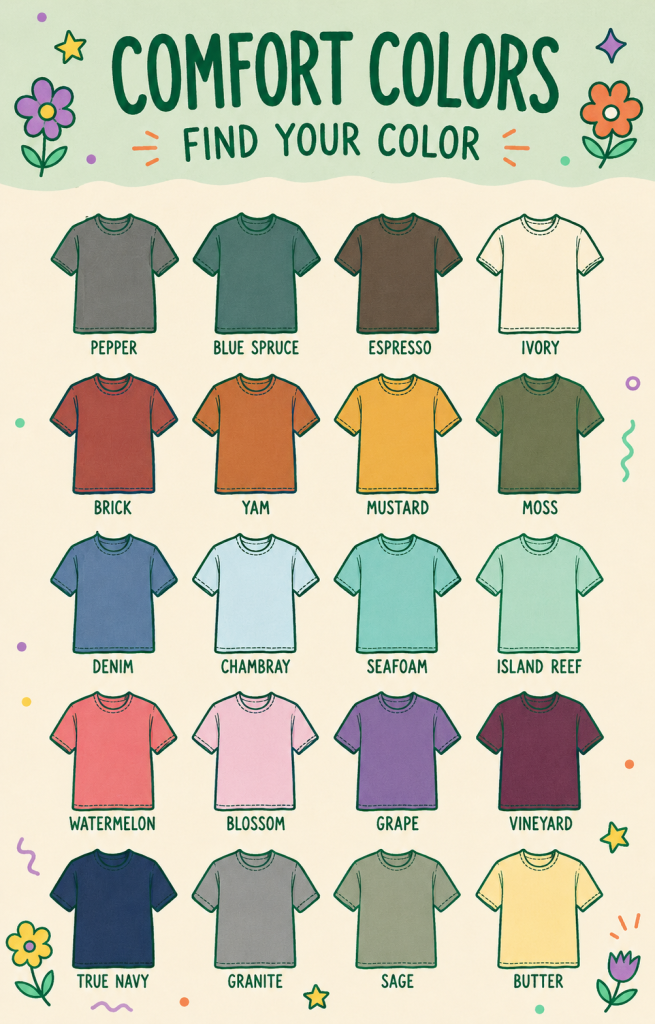
The Comfort Colors color chart is genuinely one of their biggest selling points. With over 80 colorways available, they offer colors you simply won’t find from other blank manufacturers — muted earth tones, faded pastels, rich jewel tones that all have that washed, lived-in quality. Colors like Chambray, Pepper, Blue Spruce, Yam, Moss, Seafoam, Citrine — these aren’t available from Gildan or Hanes.
If you’ve ever looked at merch from a craft brewery, a surf shop, or a boutique clothing brand and thought “that’s a great color,” there’s a good chance it was a Comfort Colors blank. The palette is designed for people who care about aesthetics, not just function.
They also offer a Color Blast collection — a newer technique where dye is sprayed onto the garment instead of immersed in a dye bath. The result is a randomized, textured look that’s more subtle than tie-dye but more interesting than a solid. No two pieces come out exactly the same. It’s available in about 10 colors across their t-shirt and crewneck sweatshirt styles.
 The Most Popular Comfort Colors Styles
Comfort Colors makes more than just tees, but three styles drive most of the demand we see:
The 1717 (Heavyweight T-Shirt) — This is the one. The classic, the flagship, the shirt that built the brand’s reputation. 6.1 oz, 100% ringspun cotton, garment-dyed, relaxed fit. When someone says “I want Comfort Colors,” nine times out of ten they mean the 1717. We stock it in a wide range of colors.
The 6030 (Pocket T-Shirt) — Same heavyweight fabric and garment-dyed process as the 1717, but with a front chest pocket. Popular for a slightly more casual, workwear-inspired look. The pocket also gives you an additional embroidery placement option.
The 1566 (Crewneck Sweatshirt) — The Comfort Colors sweatshirt is the cozy-weather extension of the brand. Same garment-dyed softness, same unique color palette, but in a heavier fleece. Extremely popular for fall merch and collegiate apparel.
Who Should Use Comfort Colors
We recommend Comfort Colors t-shirts for specific types of projects where the look and feel genuinely matter:
Retail merch. If you’re selling shirts — a band, a brand, a business — and you want people to actually pay for them and wear them repeatedly, Comfort Colors is a strong choice. The shirt itself feels premium, which justifies a retail price point.
Sorority and fraternity shirts. Greek life has basically adopted Comfort Colors as their default — and not just for the aesthetic. The boxy fit works for group orders where you’re fitting every body type in the chapter without anyone feeling like their shirt doesn’t fit right. The muted color palette complements the vintage-style designs that Greek organizations gravitate toward — hand-drawn lettering, retro illustrations, faded-look graphics. A slim-fit tee in neon green says “event giveaway.” A boxy Comfort Colors in Chambray with a one-color vintage print says “we actually thought about this.”
Churches and faith-based organizations. This is one we see a lot. Youth group shirts, mission trip tees, VBS shirts, worship team gear, church retreat keepsakes. Comfort Colors works perfectly here because the relaxed fit accommodates everyone in the congregation — from teenagers to grandparents — and the vintage aesthetic gives church shirts a look people actually want to wear outside of church. Nobody wears the stiff, bright-colored event tee again, but a soft, broken-in Comfort Colors shirt with a thoughtfully designed graphic becomes a favorite. We’ve printed shirts for Austin churches where members wore them for years after the event.
Coffee shops, breweries, and restaurants. Local food and drink spots love Comfort Colors because the brand’s vibe matches theirs — independent, neighborhood-rooted, aesthetically intentional. A coffee shop staff tee on a boxy Comfort Colors blank in Pepper or Blue Spruce, with a small logo on the left chest, looks like merch you’d actually buy. The boxy fit also works well for staff who are moving, bending, and working — no one wants a slim-fit shirt when they’re pulling espresso shots for eight hours. Many of our Austin coffee shop and restaurant clients also sell their Comfort Colors shirts as retail merch, which brings in additional revenue.
Vintage-style printing. If your design is meant to look vintage — distressed graphics, faded ink effects, retro typography, one-color prints with a worn-in feel — Comfort Colors is the only blank that matches the intent. Printing a vintage-style design on a bright, crisp Gildan creates a mismatch: the design says “old school” but the shirt says “brand new.” Comfort Colors closes that gap because the garment already has that aged, washed quality. The design and the shirt tell the same story. We can push this even further with discharge ink, which removes the garment dye and replaces it with the design color — creating a print that looks like it’s been on the shirt for a decade.
Retail merch. If you’re selling shirts — a band, a brand, a business — and you want people to actually pay for them and wear them repeatedly, Comfort Colors is a strong choice. The shirt itself feels premium, which justifies a retail price point. The boxy fit also trends well — oversized and relaxed silhouettes are dominant in current fashion, and Comfort Colors fits that look naturally.
Boutique and lifestyle brands. If your brand identity is outdoorsy, relaxed, vintage, or artsy, Comfort Colors matches that vibe in a way that a crisp, bright Gildan doesn’t. Streetwear brands, wellness studios, and beach-inspired labels consistently choose Comfort Colors for this reason.
Wedding and event keepsakes. Bachelorette weekends, family reunions, milestone events — when the shirt is a souvenir people want to keep and wear for years, the quality matters. The boxy fit means the bride doesn’t have to worry about getting sizes exactly right for everyone in the party.
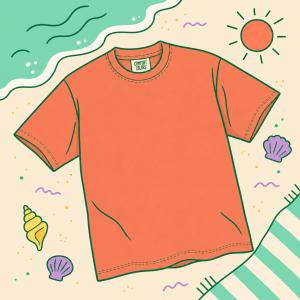 How We Print on Comfort Colors — A Printer’s Perspective
Printing on Comfort Colors is slightly different from printing on a standard blank, and this is where working with a shop that knows the garment matters.
The garment-dye process leaves the fabric with a slightly rougher texture than piece-dyed cotton. The pigment-dyed surface means inks behave a little differently — water-based inks can soak in more than expected, and plastisol needs precise curing to avoid cracking. This is why it’s important to test samples before committing to a bulk run, especially on darker colors. We do this as standard practice.
For bolder, more opaque prints on darker Comfort Colors, we use an underbase (a layer of white ink under the design colors) to make sure the colors pop against the muted garment color. This is standard practice and we factor it into the quote.
If you want the softest possible hand feel on a Comfort Colors shirt, we can use water-based or discharge inks, which soak into the fabric instead of sitting on top. The result is a print that’s essentially invisible to the touch — it matches the soft, broken-in feel of the shirt itself. This is the combination that high-end merch brands use for that “how did they print this?” quality.
One thing worth knowing: some Comfort Colors shades (particularly darker garment-dyed colors) can have a slight sulphur smell from the dyeing process when they first arrive. It washes out completely, but if you’re doing a presentation or a retail display with fresh stock, give them a wash first. This is a known quirk of the garment-dye process, not a defect.
Comfort Colors vs. Other Brands
| Comfort Colors | Gildan | Bella+Canvas | |
| Weight | 6.1 oz (heavy) | 5.3 oz (mid) | 4.2 oz (light) |
| Feel | Soft, broken-in, vintage | Standard, crisp | Soft, smooth, modern |
| Fit | Relaxed, slightly boxy | Classic, standard | Slim, tailored |
| Dye process | Garment-dyed (vintage look) | Piece-dyed (standard) | Piece-dyed (standard) |
| Color options | 80+ (unique muted tones) | 50+ (standard brights) | 100+ (modern palette) |
| Price range | $$$ (premium) | $ (budget-friendly) | $$ (mid-range) |
| Best for | Retail merch, boutique brands | Budget orders, giveaways | Fashion-forward brands |
We Print on Comfort Colors in Austin
At Oh Boy! Print Shop, we stock Comfort Colors blanks (including the 1717, 6030, and 1566) and print on them regularly. If you’re looking for Comfort Colors t-shirts with custom T-shirt printing in Austin, we can help you pick the right color, recommend the best print method for your design, and show you samples before you commit.
Get a free quote and mention you want Comfort Colors — we’ll build the order around them. Or call us at 512-270-6696.
Frequently Asked Questions
Why are Comfort Colors shirts more expensive?
Two reasons: they use 100% ringspun, USA-grown cotton (higher quality fiber) and they’re garment-dyed after construction (a more labor-intensive process than standard piece-dyeing). The result is a softer, more unique-looking shirt, but the process costs more to produce.
What is the difference between Comfort Colors and Gildan?
Gildan shirts are piece-dyed, lighter weight, and more affordable — great for budget-conscious projects. Comfort Colors shirts are garment-dyed, heavier, softer, and have a vintage look and feel. They’re a premium option for projects where the shirt quality itself matters. Gildan actually owns Comfort Colors (acquired in 2015), but the two brands serve different market segments.
Do Comfort Colors shirts shrink?
Minimally. The garment-dye process preshrinks them, so they hold their size well. Expect very slight shrinkage on the first hot wash, but nothing dramatic. We recommend washing cold and tumble drying low to keep them true to size.
What is the Comfort Colors 1717?
The 1717 is their flagship adult heavyweight t-shirt — 6.1 oz, 100% ringspun cotton, garment-dyed. Available in 70+ colors. It’s their most popular style and the one most people mean when they say “I want Comfort Colors.”
Can you screen print on Comfort Colors?
Yes. We screen print on Comfort Colors regularly at our Austin shop. The garment-dyed texture gives prints a nice vintage quality. For bolder prints on dark colors, we use an underbase for opacity. For the softest feel, we can use water-based or discharge inks. We always test on the actual garment before running a full order.
What colors do Comfort Colors come in?
Over 80 colorways, including unique garment-dyed shades you won’t find from other brands — Chambray, Pepper, Blue Spruce, Yam, Moss, Seafoam, Citrine, Berry, and many more. They also offer a Color Blast collection with a randomized, spray-dyed texture effect in about 10 colors.
What is Comfort Colors Color Blast?
Color Blast is a newer Comfort Colors technique where dye is sprayed onto the garment instead of immersed in a dye bath. The result is a randomized, textured look — more subtle than tie-dye, but more interesting than a solid. No two pieces come out exactly the same. It’s available in t-shirts and crewneck sweatshirts.
Are Comfort Colors worth the extra cost?
For retail merch, boutique brands, and keepsake shirts people will wear for years — yes, the premium is justified by the feel and look. For giveaway shirts, one-time events, or budget-conscious bulk orders, a quality economy blank does the job at a lower price. We carry both and we’ll always recommend what actually fits your project and budget.

Leave a Reply