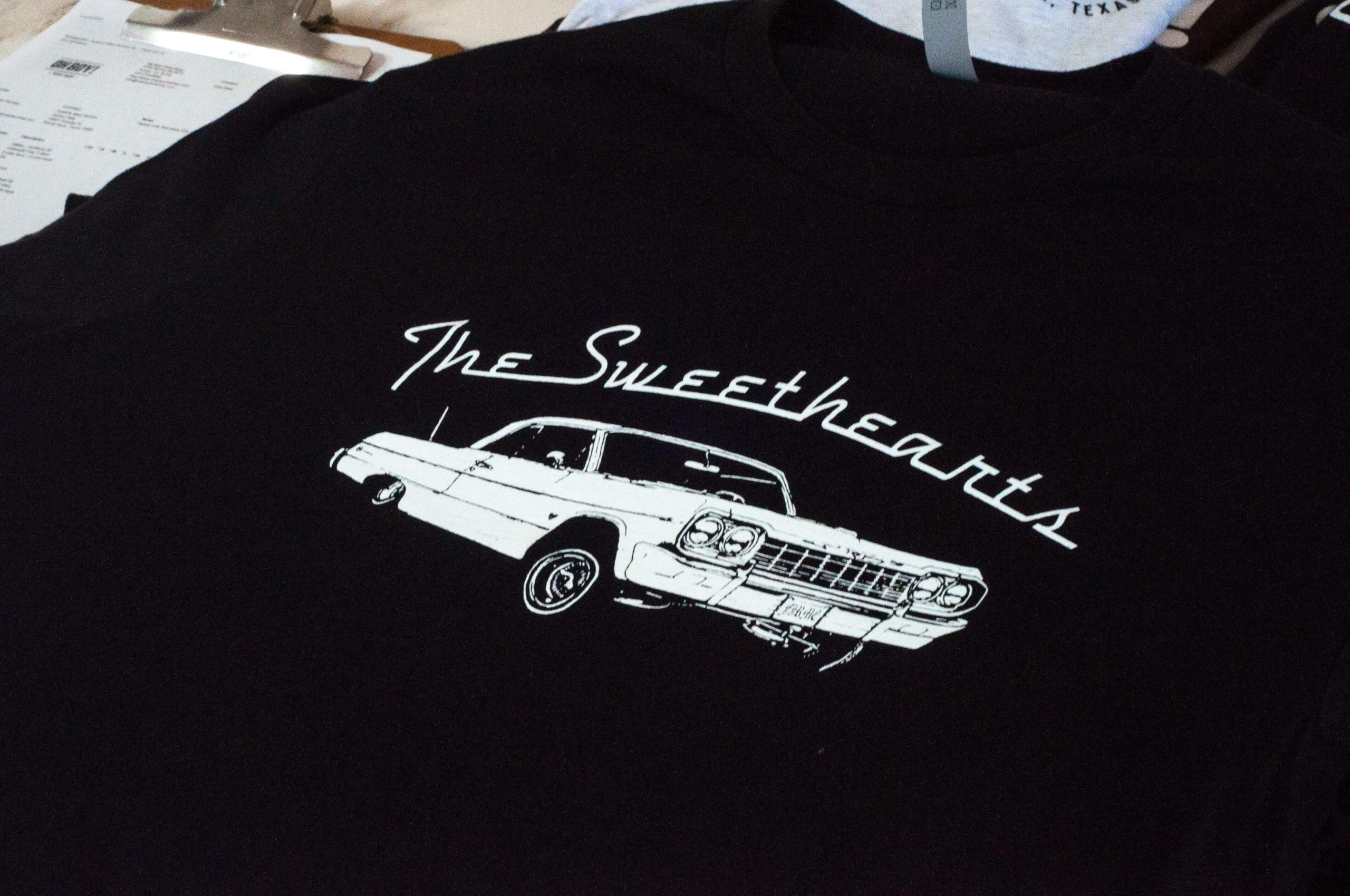
Screen printing isn’t just one thing. There are different ink types, different curing methods, and different ways to handle artwork — and the right choice depends on what you’re printing, what you’re printing it on, and how you want it to feel when someone puts the shirt on.
Most customers don’t need to know the technical details. But when someone asks “can you make this feel softer?” or “why does this print feel different from that one?” — the answer is usually about which technique we used. Here’s a plain-English breakdown of what we work with every day at the shop.
How screen printing works at a basic level
At its core, screen printing uses a mesh screen and stencil to push ink onto the shirt in the exact areas where the design should appear. Each ink color usually needs its own screen, which is why simple one- or two-color designs are easier to price and faster to produce than complicated full-color artwork.
That process is also what makes screen printing such a strong choice for custom T-shirts, work shirts, event shirts, and branded apparel. When the artwork, ink, garment, and curing are handled correctly, the print holds up through regular washing and wear. For Austin screen printing orders with real deadlines, those production choices matter as much as the design itself.
Plastisol Ink — The Workhorse
Plastisol is what most people picture when they think of screen printing. It sits on top of the fabric and cures with heat. The result is a bold, opaque, durable print with strong color — even on dark shirts.
We use plastisol for the majority of our orders because it’s versatile and reliable. It works well on cotton, blends, and polyester. The colors stay true wash after wash, and the print handles heavy wear without cracking or fading. If you’ve ever worn a concert tee or a branded work shirt that still looks good after years of washing, that’s almost certainly plastisol.
The tradeoff is feel. Because the ink sits on top of the fabric rather than soaking into it, you can feel the print with your fingers — there’s a slight raised texture. For most people that’s fine, and our hybrid printing approach keeps it softer than what a lot of shops produce. But if “no hand feel at all” is the goal, that’s where the next two methods come in.
Water-Based Ink — The Soft One
Water-based ink soaks into the fibers of the fabric instead of sitting on top. The result is a print you can barely feel — the design becomes part of the shirt rather than a layer on it. The look is softer and more vintage, almost like the design was dyed into the garment.
We reach for water-based ink when a customer wants that broken-in, retail-quality feel — the kind of shirt you’d pick up at a boutique where the print doesn’t feel like a print at all. It works beautifully on lighter-colored, 100% cotton shirts.
The honest limitations: water-based ink doesn’t work as well on dark garments (since it’s not opaque enough to cover dark fabric), it takes longer to cure, and it’s less forgiving during production. It costs a bit more and requires more attention at the press. But for the right project, the feel is worth it.
Discharge Ink — The One That Removes Color
Discharge is the technique that surprises people the most. Instead of adding ink on top of the fabric, discharge actually removes the dye from the shirt and replaces it with the ink color. The result is an incredibly soft print with zero hand feel — the design literally lives inside the fabric.
We use discharge on dark-colored, 100% cotton shirts when a customer wants a soft, vintage look without the heavy ink layer that plastisol would require on a dark garment. It’s what gives high-end band merch and premium retail tees that “how did they print this?” quality.
The limitations are real, though. Discharge only works on 100% cotton (not blends or polyester), and the final color can vary slightly depending on the garment dye — so exact Pantone matching is harder. It also has a distinct smell during curing that requires good ventilation. We’ll always talk through these tradeoffs before recommending it.
Halftones — When You Need Gradients or Detail
Halftoning isn’t a different ink type — it’s a technique we use with any of the above inks to create the illusion of shading, gradients, and tonal variation using tiny dots of ink. Think of it like a newspaper photo: up close it’s dots, from a normal distance it looks like a smooth image.
We use halftones when a design has shading, fades, or photographic elements that can’t be achieved with flat blocks of color. It lets us print detailed, realistic-looking artwork while still keeping the color count manageable — which keeps your cost down compared to a full-color digital print.
Halftones require precise screen-making and careful ink management at the press. The dots need to be clean and consistent across the whole run, which is why this technique separates experienced printers from beginners. It’s one of the things we take particular pride in at the shop.
So Which One Should You Choose?
Honestly, you don’t need to choose — that’s our job. When you send us your artwork and tell us what you’re going for, we recommend the technique that fits. Here’s the general guide we work from:
- Bold, durable, works on any color shirt: Plastisol
- Super soft feel, lighter shirts: Water-based
- Soft feel on dark shirts, vintage look: Discharge
- Detailed artwork, gradients, photo-like designs: Halftones (with any ink type)
Most orders use plastisol because it’s the best all-around option. But knowing the alternatives exist means you can make a more informed choice — and if you ask us “can you make this softer?” now you know why we might suggest discharge or water-based instead.
Got a project where the feel or look of the print matters as much as the design? Get a quote and tell us what you’re going for — we’ll recommend the right technique.
